The Work
These aren't just GIS projects. They're spatial systems — workflows that go beyond making a map to building something that can answer a spatial question automatically, at scale, for any city you point it at.
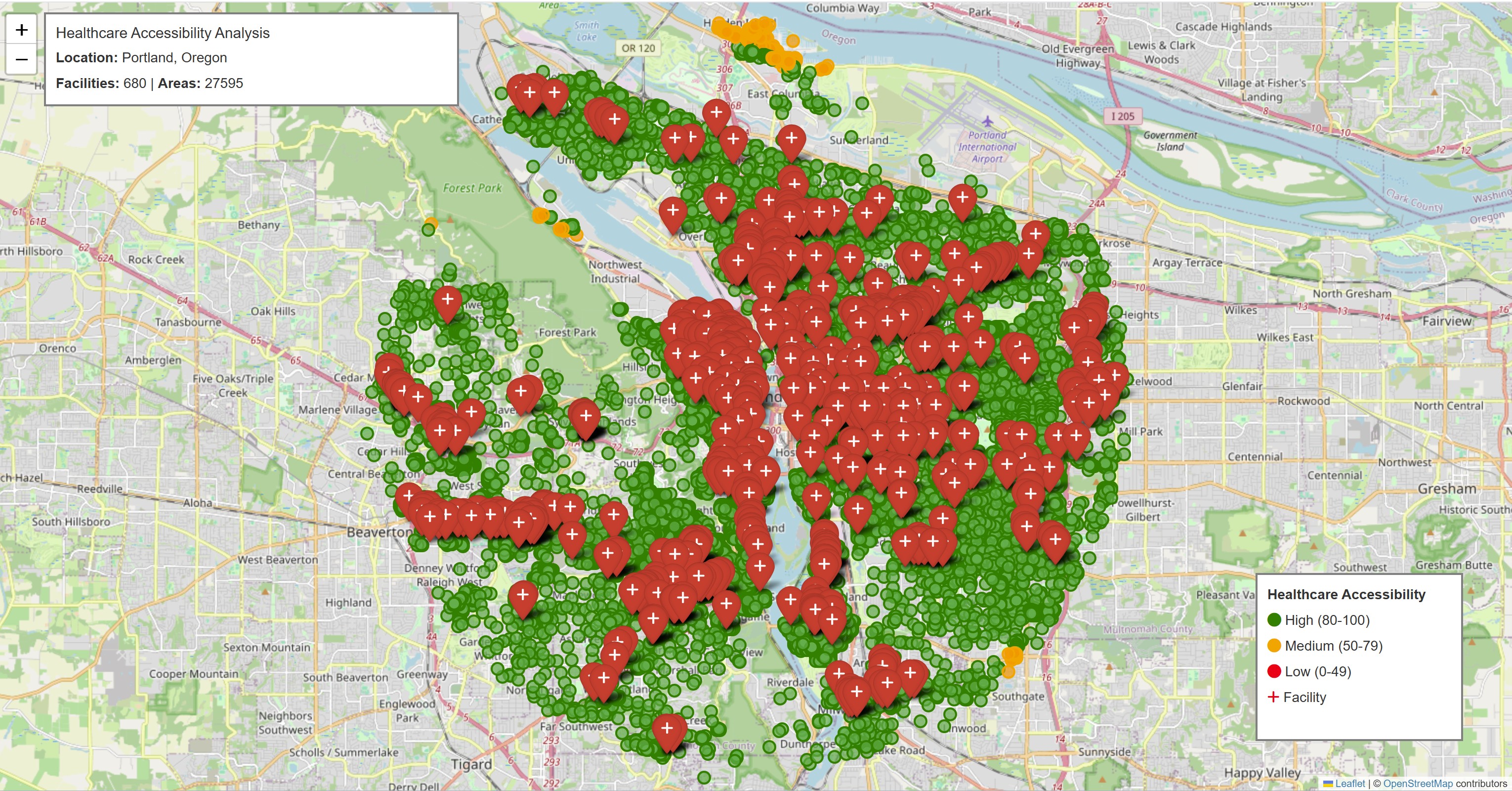
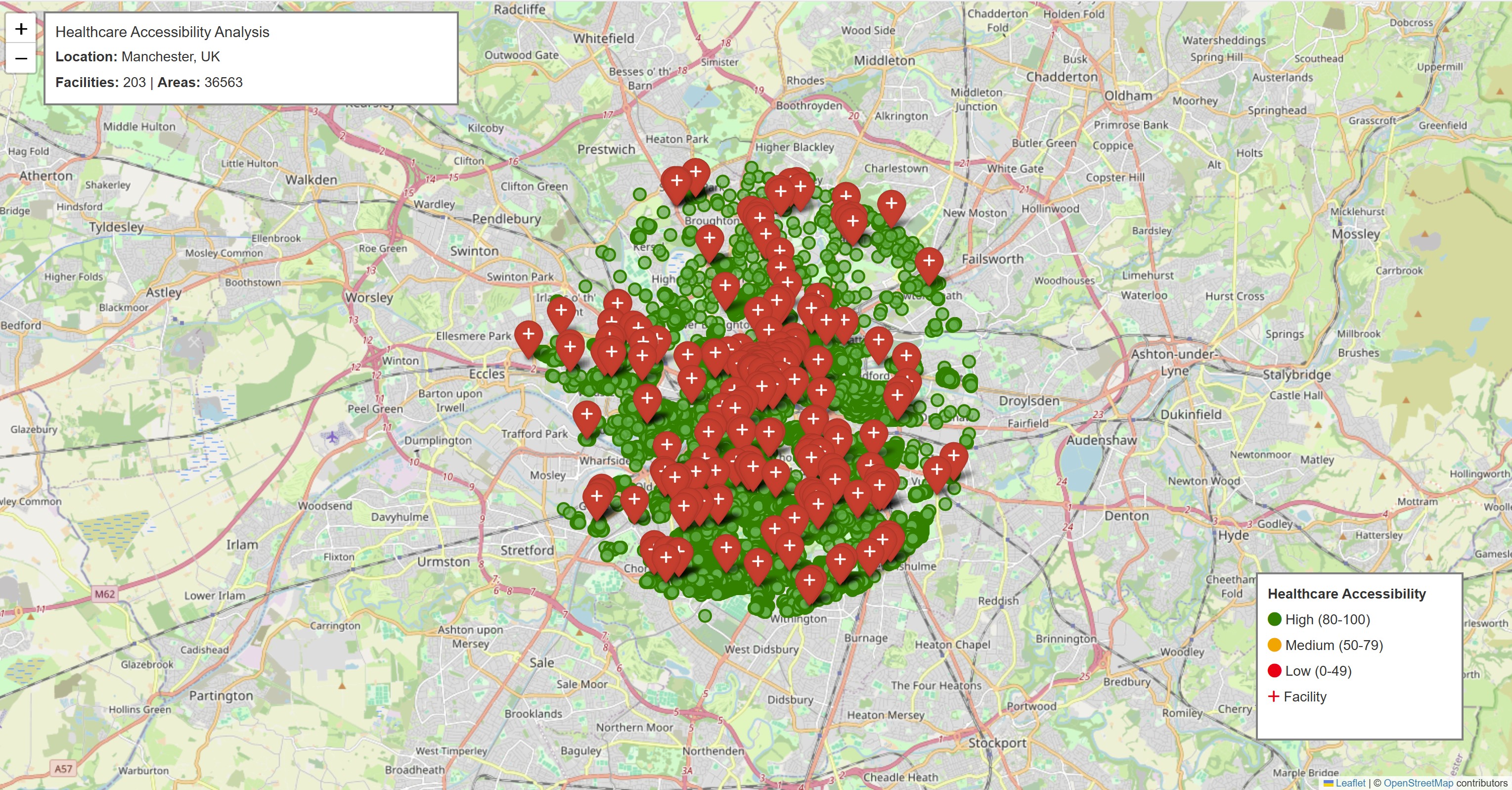
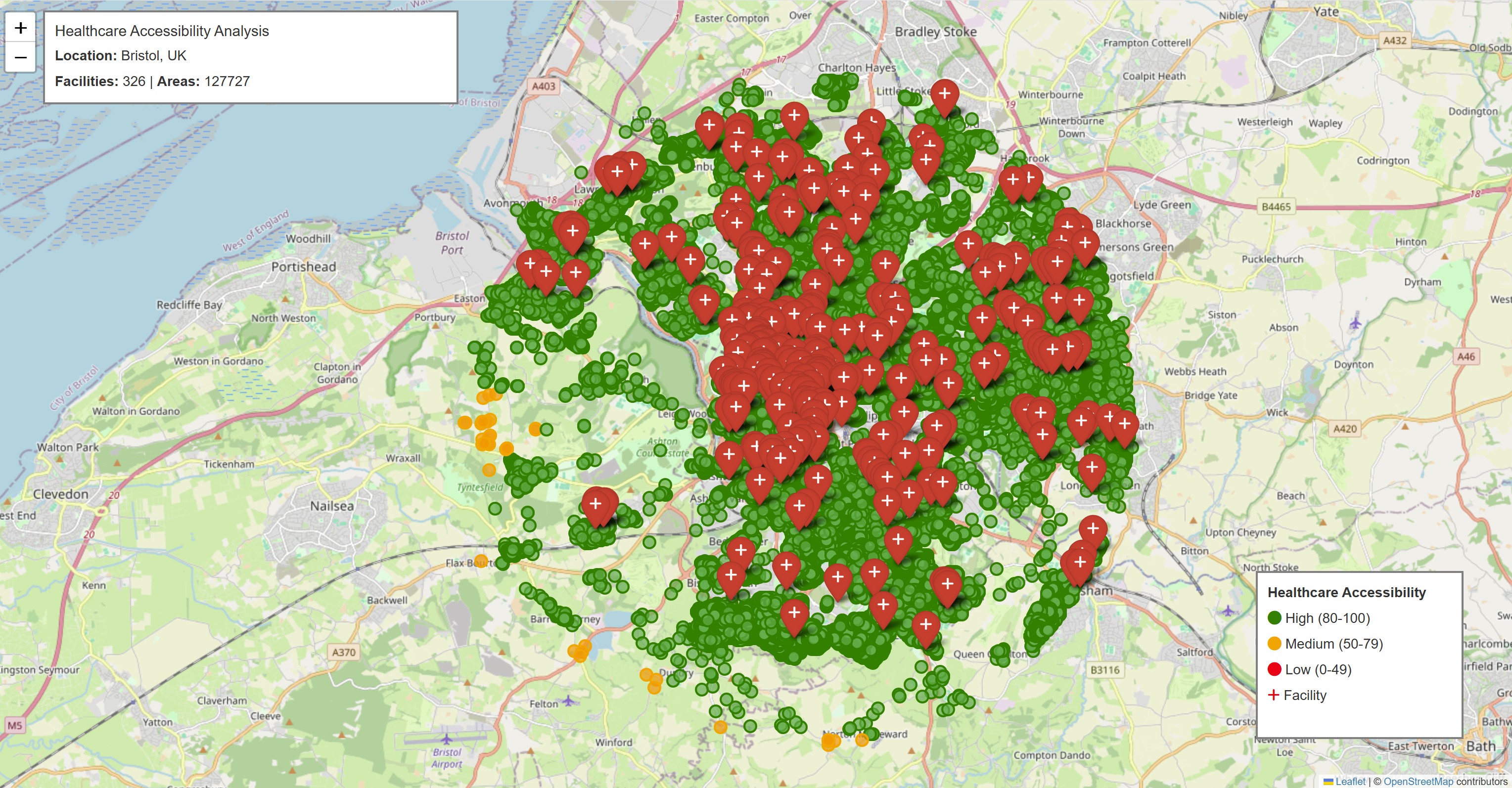
Five systems were built as part of the LLM Agentic GeoAI Mastery certification: each combined Python, open-source geospatial libraries, and OpenStreetMap data into an agentic pipeline — the system structures the spatial query, discovers and evaluates datasets, performs the analysis, and generates the output.
The technical shift matters. Traditional GIS workflows are manual and linear: load data, run analysis, produce map, repeat. Agentic GIS workflows are dynamic — the system adapts to the spatial question, not the other way around. That changes what's possible when you need to analyze accessibility across four cities on three continents with consistent methodology.
The certification also required solving real dependency management challenges: ensuring Python environments and Jupyter Notebook libraries were correctly configured for AI-driven spatial workflows — the kind of environment debugging that blocks most analysts from actually running these pipelines.
The Five Systems
Traditional GIS vs. Agentic GIS
- Manual, linear workflow
- Analyst loads each dataset
- One question, one output
- Re-run from scratch per city
- Analysis locked to analyst's time
- Dynamic, adaptive pipeline
- System discovers datasets
- Scales to any geography
- Consistent methodology across cities
- Analysis runs on demand
"Traditional GIS is manual and linear. Agentic GIS adapts to the question. Building five systems across four cities showed me what that shift actually means in practice."
Process
-
1
Research Studied agentic GIS architecture; identified OpenStreetMap datasets and geospatial libraries appropriate for each accessibility problem type.
-
2
Data Prep Configured Python environments and Jupyter dependencies; sourced OSM data for Portland, Bristol, Tokyo, São Paulo; structured spatial queries.
-
3
GIS Work Built 5 agentic spatial systems — school accessibility scoring, weather vulnerability assessment, multi-hazard response coordination, healthcare accessibility, urban accessibility gap analysis.
-
4
Output 5 complete systems; agentic pipelines adaptable across geographies; certified February 2026.
Even in agentic workflows — where the system does much of the execution automatically — the analytical framework has to be established first. What question is the system answering? What does a valid output look like? What failure modes need to be caught? The structure comes before any code runs.